

Behind the words our technology sits a simple idea: technology is the practical application of scientific knowledge, and in dentistry that means the tools used to find and treat problems in your teeth and gums. Those tools have a long history: the Wikipedia entry on the dental drill notes that the Indus Valley civilization has yielded evidence of dentistry being practiced as far back as 7000 BCE. For patients dealing with early decay, gum disease, or tooth sensitivity, the tools in the room can change what treatment looks like and how much tooth structure it involves.
Our Technology
Meet Dr. Rocio Zaragoza Santacruz, DDS
Dr. Rocio Zaragoza Santacruz focuses on accurate diagnosis and comfortable treatment for patients in Pacific Beach and nearby San Diego neighborhoods. She earned her undergraduate degree at Georgia Institute of Technology and then completed her dental degree at UCLA School of Dentistry. Today she serves on the board of the San Diego Academy of General Dentistry and on a committee of the San Diego Dental Society. Outside the practice, she volunteers as faculty at the UCSD Free Dental Clinic and serves as a wish granter with the Make-A-Wish Foundation. She also takes part in dental study clubs, where dentists review new techniques and patient comfort technology together. At Azara Dentistry, that ongoing study guides which tools she brings into the treatment room and how she uses them during your visit.
Learn About Your Doctor!
Conditions, Symptoms, and Pain That Modern Dental Equipment Helps Address
Tooth decay, gum disease, tooth sensitivity, oral lesions, and bite misalignment can all progress quietly, and the CDC reports that 1 in 5 adults aged 20 to 64 have at least one untreated cavity. Modern dental equipment, including digital X-rays and a dental laser, helps clinicians find and treat these problems with more precision and less discomfort. A cavity between teeth, early bone loss, or a new lesion on soft tissue won’t show up in a mirror, and a visual exam alone can miss them too.
Recognizing the Problem with Digital Dental X-Rays and Early Detection
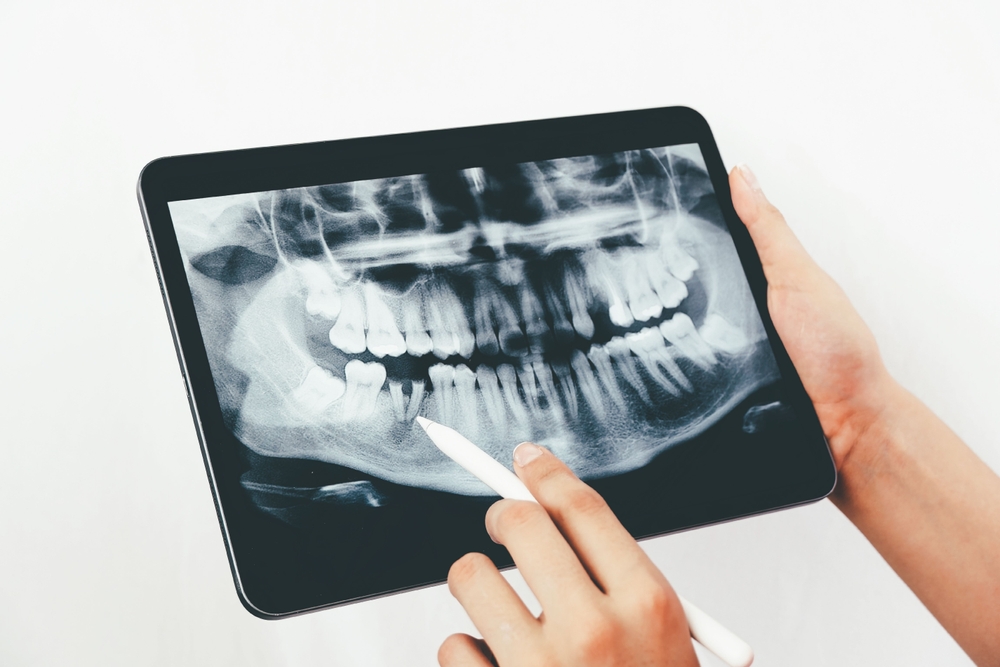
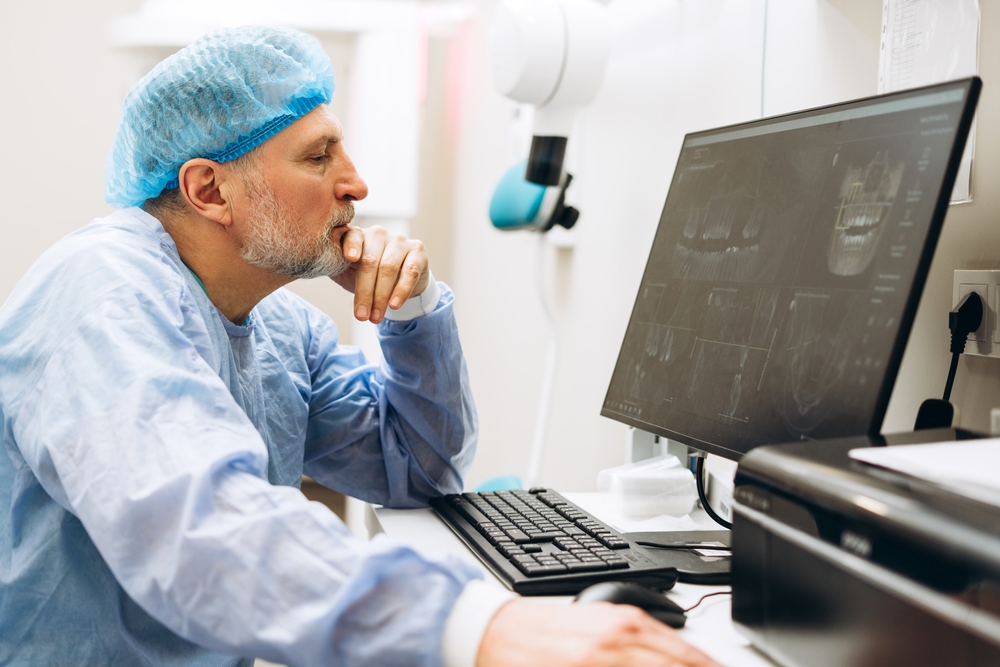
Digital X-rays show the inside of a tooth and the bone around it, where decay and bone loss usually begin. A tooth can look whole from the outside while decay works through its interior or bone thins along its root.
Dental X-rays may show some cavities before they can be seen just by looking at the teeth, according to MedlinePlus. We can often treat a weak spot found on an image before it needs a larger repair.
We rely on bitewing and periapical images during an exam. Bitewing images show the back teeth on the top and bottom together, which helps us spot decay between them. Periapical images capture a whole tooth, including the root tip and the bone that holds it, so we can check areas that a bitewing image leaves out. For each picture, you bite gently on a small sensor. It takes a few seconds.
How often you need images depends on your own history. Someone with frequent cavities may need them sooner than someone whose teeth have stayed healthy for years.
Some signs are easy to notice on your own, and any of them is worth mentioning at your next visit:
- Sensitivity to hot or cold that lingers after the food is gone
- A sharp twinge when you bite down on one spot
- Floss that catches or frays at the same place every time
- A vague sense that a tooth feels different, even without pain
Sensitivity can also come from gum recession or tooth grinding, and an X-ray helps confirm or rule out decay as the cause.
When Should You Seek a Professional Using Laser Dentistry or Advanced Care?
See a dentist when something in your mouth changes and stays that way, even without pain. Waiting for pain to appear before scheduling an appointment means waiting for a problem to reach a stage where it’s harder to treat.
Pain tends to arrive late. Decay can stay quiet until it reaches the deeper layers of a tooth, and gum disease can advance for a long time without hurting. These early changes respond well to prompt care:
- Soft tissue changes, such as a patch that looks whiter or redder than the tissue around it
- Early lesions, including a sore or bump that hasn’t healed on its own
- Gum inflammation, where gums bleed when you brush or look puffy along the edges
Laser dentistry suits these situations because it treats soft tissue with precision and causes less trauma to surrounding tissue. We use a dental laser for soft tissue care, so an early gum or tissue concern can get focused treatment while it’s small. Decay inside the tooth itself still calls for other treatment.
What counts as a change worth a visit? A tooth that suddenly feels rough to your tongue or a gum line that seems to be pulling back both qualify.
The CDC’s oral health tips for adults state the baseline: Visit your dentist at least once a year, even for people who wear dentures and have lost some or all of their teeth. At a checkup, we look at your gums, the soft tissue of your cheeks and tongue, and each tooth surface.
Some changes shouldn’t wait for a routine checkup at all, including facial swelling, a cracked tooth, a knocked-out tooth, or tooth pain that wakes you up at night.
Speak to a Professional!
Prevention and Hygiene Education Through Guided Biofilm Therapy
Preventing decay and gum disease starts with removing biofilm before it hardens into tartar. Biofilm is the structured layer of bacteria that forms on tooth surfaces and along the gumline. It plays a central role in both tooth decay and periodontal disease, and it reforms continuously, so professional removal matters even when your home routine is consistent.
At home, steady habits keep biofilm thin between visits: brushing every morning and every night, and cleaning between your teeth each day. Floss reaches tight contacts. Interdental brushes suit wider gaps and the spaces around bridges.
Dental plaque is hard to spot, and the NIDCR points out that you can see it more easily if you stain it. Disclosing tablets from a pharmacy apply that idea at home, coloring the spots your brush keeps missing. Chewing one after brushing shows you where to slow down. Angling the bristles toward the gumline reaches the edge where gum inflammation starts.
Guided biofilm therapy brings the same principle into our hygiene visits, and each cleaning follows a set order:
- A disclosing agent goes on your teeth and colors the biofilm so it stands out.
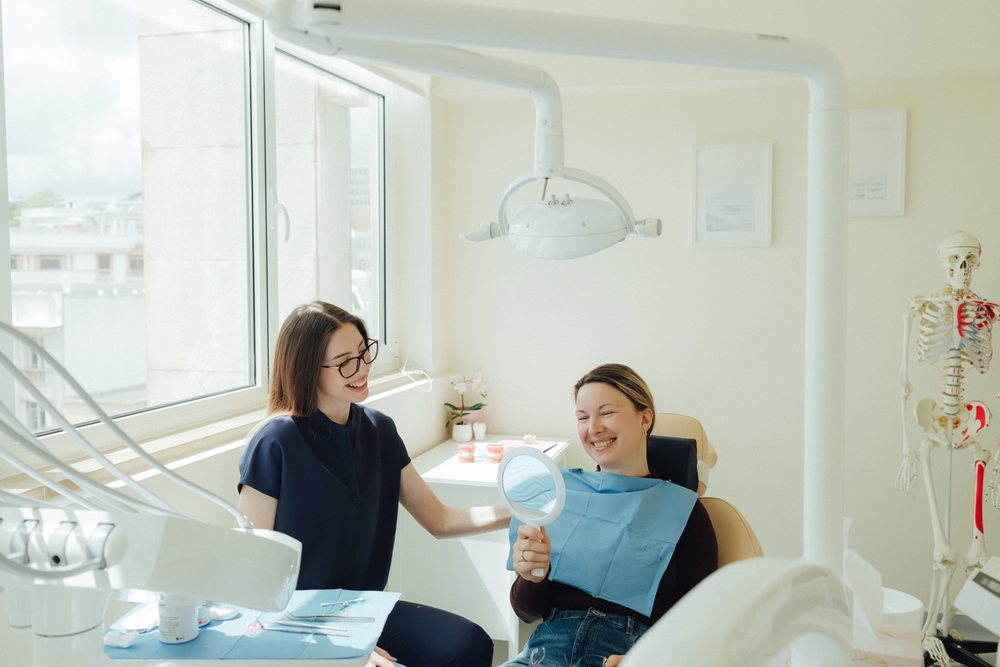
- You see the colored areas in a mirror, so you know where plaque collects in your own mouth.
- We remove the stained biofilm and any hardened tartar with targeted instruments.
- A final polish and color check confirm that the surfaces are clean.
This method is gentler on enamel and gum tissue than traditional scaling.
Popular Home Remedies and Curodont Remineralization Awareness
Natural home remedies draw real attention, and a 2026 systematic review in Oral Health & Preventive Dentistry opens by noting the growing interest in natural and sustainable oral hygiene options.
These approaches come up again and again:
- Oil pulling: swishing a spoonful of coconut or sesame oil around the mouth for several minutes, then spitting it out
- Remineralizing toothpastes: pastes with added minerals meant to strengthen weak spots in enamel
- Fluoride rinses: over-the-counter rinses used after brushing to give enamel extra fluoride
- Dietary changes: cutting back on sugary snacks and acidic drinks, and sipping water after meals
Fluoride-based products have the strongest evidence base among these options and do meaningfully support enamel health when used consistently. Fluoride rinses and toothpastes reach every tooth at once, which suits daily upkeep.
Curodont works differently from anything available over the counter. It’s a professional treatment that supports the natural remineralization of early enamel lesions at a structural level, aimed at the exact spot where enamel has started to weaken. We apply it during a regular visit, and it involves no drilling.
Curodont fits the stage when a weak spot shows up on an exam but hasn’t yet broken through into a cavity.
What the Research Says About Conservative Dental Tools and Home Care
A 2026 systematic review comparing oil pulling and miswak with toothbrushing and standard rinses indicates that oil pulling with sesame or coconut oil produced moderate reductions in microbial load.
For oil pulling and miswak, the authors concluded that further research is required to confirm their efficacy and their place in oral care today. The review did not study remineralizing toothpastes or fluoride rinses, so its conclusion covers oil pulling and miswak alone.
Remineralizing toothpastes and fluoride rinses add minerals to enamel that has only started to soften. Once decay breaks through into a true cavity, the lost structure doesn’t grow back, and no paste or rinse can refill it.
Conservative dental tools used in a clinical setting, including precision remineralization agents and targeted scaling instruments, act on one lesion or one tooth surface at a time. Conservative dentistry aims to keep as much natural tooth structure as possible, so an early lesion gets the smallest treatment that can stop it.
Dietary changes lower how often bacteria get sugar to feed on, which slows new decay. They leave existing damage in place, though. A cavity that has already formed still needs treatment.
Cost and Insurance for Dental Imaging Technology and Advanced Treatment
Catching a problem with a digital X-ray during a routine visit costs a fraction of what a crown, root canal, or periodontal surgery costs later. Technology-assisted care is largely preventive in its impact, because earlier intervention usually means less treatment.
Industry Average Pricing for Technology-Assisted Dental Care
Industry averages give you a rough starting point for budgeting.
Bitewing X-rays have an average cost nationwide that ranges from $52 to $120, according to a 2024 survey conducted for CareCredit, with the equipment used and your location driving the spread. Several factors move a bill within that range:
- The type of image, since a full set of mouth images covers more teeth than a single view
- Where you live, because regional costs shape local fees
- The provider, since each practice sets fees based on its own overhead
- The number of images your visit actually needs
Practices price laser-assisted procedures and professional remineralization treatments separately, and those fees vary with the area treated and the complexity involved. A laser procedure on a small patch of gum tissue covers less ground than one that treats several teeth. Remineralization pricing usually rises with the number of lesions treated.
These figures are general industry averages and do not reflect the pricing at this practice. Contact us directly to verify current rates and what’s included in your visit.
Dental practices bill each service under its own procedure code. Ask for an itemized estimate first. It should list every procedure code before treatment starts, and it can show whether the exam fee sits on a separate line from the X-ray images.
Common Insurance Providers for Dental Technology Services
Dental plans generally place X-rays and professional cleanings in their diagnostic and preventive tier, a standard part of dental benefits. Coverage for newer procedures varies by plan.
Some plans list laser treatment or remineralization therapy under basic care, while others pay only up to the fee for an older alternative. Plans also set frequency limits, which cap how often they’ll pay for X-rays or cleanings in a set period. You can ask your insurer for a predetermination, which is a written estimate of what the plan will pay, before any larger treatment gets underway. An in-network practice has agreed to set fees with the carrier, while an out-of-network practice may bill above what the plan pays.
The list below is a general industry reference, and we can’t guarantee that it matches the plans we accept. As one example of a published carrier list, the U.S. Office of Personnel Management names these dental carriers under the federal employees’ dental program:
- Aetna Life Insurance Company
- Delta Dental
- Dominion Dental
- FEP BlueDental
- GEHA
- MetLife
- United Concordia
- Group Health
- Humana
- Triple-S Salud
Contact us to verify which plans we currently accept before your visit.
Speak With A Professional!
FAQs
What makes digital X-rays different from the film X-rays used in older dental offices?
Digital X-rays use less radiation than traditional film and show the image on a screen within seconds. You can look at the picture with us, and we can enlarge any spot that needs a closer view.
How does laser dentistry work for soft tissue treatment?
A dental laser uses focused light energy to treat soft tissue precisely, which reduces bleeding and helps healing. We use it here for cold sore treatment and to control bleeding, a process called hemostasis.
Can a telehealth visit replace an in-person dental exam?
A telehealth visit works well for follow-ups and for deciding if a concern needs a visit to the practice. It can’t replace X-rays or a hands-on exam, so a diagnosis still happens in person.
Can guided biofilm therapy replace a standard dental cleaning?
Yes, guided biofilm therapy is itself a professional cleaning method. It counts as your full hygiene visit, so there’s no separate cleaning to schedule afterward.
How does sedation dentistry work alongside other dental technology?
Sedation dentistry manages anxiety and discomfort during a procedure, while the clinical tools handle the treatment itself. Used together, they let patients who’ve been putting off care get the treatment they need with their anxiety under control.