

At its core, your first visit, and what to expect from it, is a checkup, a periodic medical or dental examination. The profession’s name has roots in two languages: the term dentistry comes from dentist, which derives from dentiste and, further back, the French and Latin words for tooth. If anxiety, cost concerns, or a visit that went badly has kept you away, knowing the appointment covers a health history review, an exam, and X-rays can make booking easier.
Your First Visit/What to Expect
Meet Dr. Rocio Zaragoza
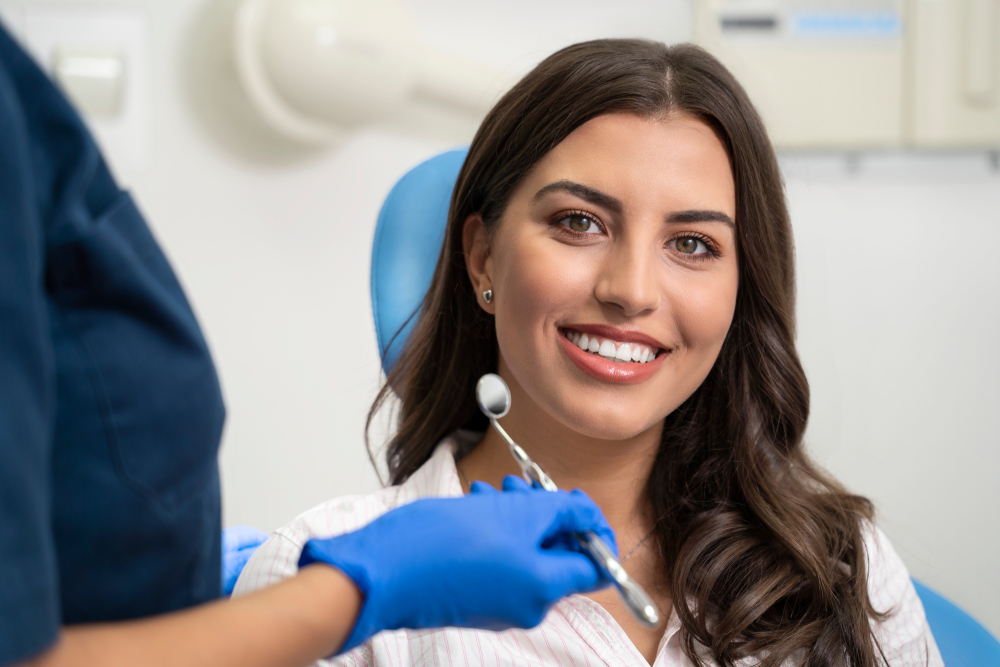
Dr. Rocio Zaragoza Santacruz, DDS, focuses on patient-centered care at Azara Dentistry, weighing your general health alongside your teeth starting with your first dental visit. She completed her dental training at UCLA School of Dentistry, a nationally ranked program, and has stayed active in San Diego’s dental community ever since. She serves as a Board Member of the San Diego Academy of General Dentistry and as a Committee Member of the San Diego Dental Society. Her volunteer work includes serving as faculty at the UCSD Free Dental Clinic, where she provides direct care to San Diego residents. She also takes part in dental study clubs. Outside dentistry, Dr. Zaragoza serves as a Wish Granter for the Make-A-Wish Foundation. Our mission describes care delivered with a gentle touch that takes your personal needs and conditions into account.
Learn About Your Doctor!
Conditions, Symptoms, and Pain That Bring Patients Through Our Door
A new ache, bleeding when you brush, sensitivity to hot or cold, or a tooth that looks different can each prompt a first visit. Sometimes the reason is a long gap since your last checkup, and the 2025 National Health Interview Survey found that 66.7% of U.S. adults age 18 and older had a dental exam or cleaning in the past year. A full exam lets us check your whole mouth, so we can treat what needs attention now and flag what’s worth watching. Our comfort menu is available from check-in, before the clinical part of the exam begins.
Recognizing the Problem
Dental avoidance tends to start with a feeling you can name, and that feeling usually traces back to one of these:
- Dread that builds in the days before an appointment
- A memory of a procedure that hurt
- A clinical setting that makes you tense as soon as you sit down
Avoidance also shows up in habits. You might reschedule more than once, or skip checkups until something starts to hurt.
In a 2025 survey of Romanian adults, some degree of anxiety before a dental procedure was endorsed by 60.5% of respondents, making nervous respondents the majority in that group. Those answers came straight from the adults themselves, through an online questionnaire about their own nerves before treatment. The same survey also asked respondents which ways of managing that anxiety they preferred.
For patients who find the clinical setting stressful, we offer weighted blankets and headphones during appointments.
A weighted blanket rests across your lap and chest while you sit back in the chair. Its weight spreads evenly across both areas during the exam.
Headphones help with a different trigger: sound. They cover the hum of suction and polishing tools. Those noises can bring back the memory of an earlier procedure that hurt.
Headphones fit best when sound bothers you most, and the blanket may suit you better if you feel anxious before you even recline.
You can use both at once and ask for either one before the exam starts. Telling us which trigger fits you helps us set the pace of your visit.
When Should You Seek a Professional?
MedlinePlus advises that most adults and children should have a routine dental exam every six months. The service comes from the U.S. National Library of Medicine. Your own schedule can shift from there, since past cavities or gum problems may call for shorter gaps between visits. That regular rhythm gives a dentist a steady look at changes that build slowly.
How long is too long to wait?
Symptoms change the answer. If you’re experiencing tooth pain, swelling, or sensitivity that doesn’t fade on its own, waiting for your next routine slot isn’t the right choice. Each sign can look like this:
- Pain that wakes you at night or returns each time you chew
- Swelling in your gum, cheek, or jaw, even when it barely hurts
- Sensitivity that lingers long after the hot or cold food is gone
Swelling that spreads toward your eye or neck, or that comes with a fever, calls for care the same day.
Symptoms that come and go still count. A toothache that fades for a week and then returns can be the same problem showing up again.
Some problems develop before you can see or feel them. A wellness scan during your first visit helps identify concerns that aren’t yet visible or painful. That makes your first visit a useful baseline, especially if you’re new to the area or haven’t had a checkup in years. Future exams compare your mouth against that starting point.
A routine exam looks at your whole mouth on a set schedule, while an urgent visit starts with the tooth that’s bothering you and widens from there.
Speak to a Professional!
Prevention and Hygiene Education
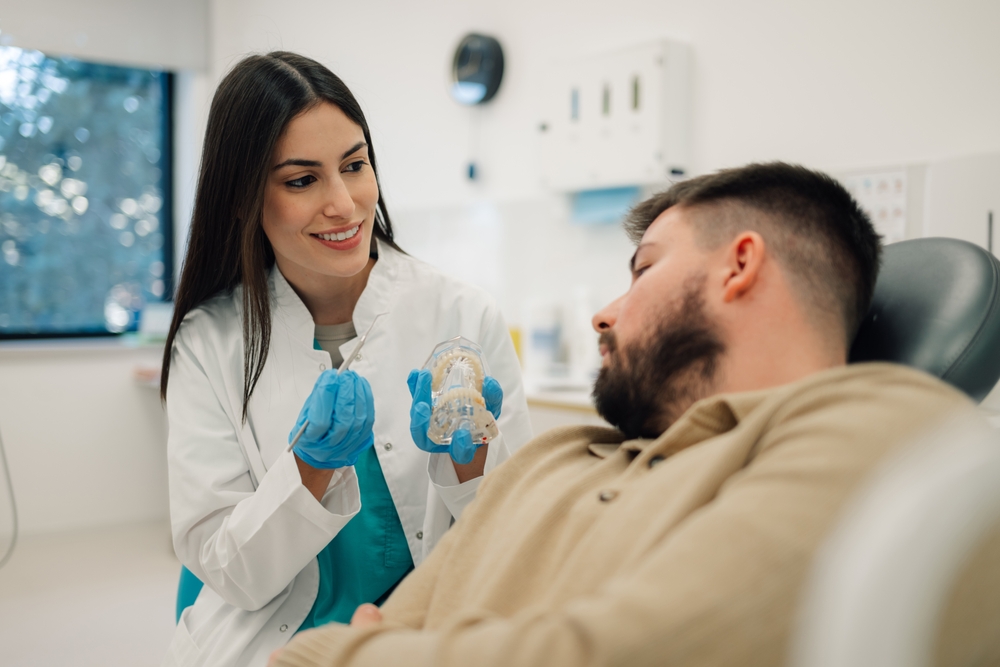
What you do between visits determines how much work your next appointment requires. The CDC’s advice for adults is direct: Brush your teeth well twice a day and floss between your teeth to remove plaque.
A daily routine built on that advice can look like this:
- Brush in the morning and before bed with fluoride toothpaste, covering the front, back, and chewing surfaces of each tooth.
- Floss once a day, curving the floss around each tooth and slipping it just under the gumline.
- Brush your tongue, where bacteria collect between meals.
- Swap your toothbrush when the bristles start to fray.
- Reach for water when you’re thirsty, and save sugary or acidic drinks for mealtimes.
- Sip water through the day so your mouth stays moist.
That routine targets plaque, the sticky film of bacteria that forms on teeth every day. If you leave it in place, plaque buildup leads to cavities and gum disease. Over time, plaque can also harden into tartar, which only a professional cleaning removes.
Drinks shape your results too. Sugary or acidic drinks, such as soda, juice, and sports drinks, wear down enamel a little more with each sip. Each snack restarts the acid that bacteria produce, so grouping snacks with meals gives your enamel longer stretches of rest. Grazing all afternoon keeps that acid active for hours.
Staying hydrated supports saliva production, and saliva is your mouth’s natural defense against bacteria.
If floss feels hard to handle, floss picks or a water flosser can reach the same spaces between teeth. Daily use counts most, so pick the one you’ll actually use.
Our beverage station is there before and after your appointment as a practical reminder that water is part of oral care too.
Popular Home Remedies Before the First Visit
In a study of adults attending a university dental hospital in the United Arab Emirates, 70.7% indicated that they practice self-medication for oral health problems, with toothache the most common trigger. Those respondents answered a questionnaire at the University Dental Hospital in Sharjah.
Four remedies circulate widely, each used in its own way:
- Salt water rinse: salt stirred into warm water, swished around the mouth, and spit out, often for sore gums
- Clove oil: dabbed on a sore tooth with a cotton swab in hopes of numbing the pain
- Oil pulling: a spoonful of coconut or sesame oil swished for several minutes, then spit out, as a daily habit
- Over-the-counter numbing gel: rubbed on the gum beside a toothache for short-term relief
Each of these spreads easily. Friends pass them along, online videos walk through them step by step, and the ingredients often sit in a kitchen cabinet already. Clove oil and numbing gel also share drugstore shelves with toothpaste.
Oil pulling comes from traditional Ayurvedic practice in India and has gained a large online following. Clove oil has a similarly long history in folk remedies for tooth pain.
Comfort tools show up in home care too. Anti-stress balls give restless hands something to do in the waiting room, and lip balm keeps lips comfortable when your mouth stays open for a long stretch. Both are also available during your visit with us.
What the Research Says
Research indicates that oil pulling offers modest benefits with clear limits.
A recent systematic review of traditional oral hygiene practices found that oil pulling with sesame or coconut oil showed moderate reductions in microbial load and improved gum health. Results varied when the review compared oil pulling with chlorhexidine mouthwash. Chlorhexidine is a prescription-strength rinse that dentists use to reduce bacteria, which makes it a demanding comparison.
The review weighed oil pulling and miswak, a traditional chewing stick, against standard hygiene practices. It also calls for cautious interpretation of its findings. Fewer bacteria in your mouth does not reverse damage already done to a tooth. A cavity stays in place after the oil is spit out.
Salt water rinses can soothe irritated gums for a short time. That relief eases the feeling while the cause underneath stays the same.
Clove oil contains eugenol, a compound dentists have used for numbing for many years. It can quiet a sore tooth briefly, and the pain returns once it wears off. Applied too often, it can irritate the gums.
Numbing gels act on the gum’s surface and dull pain for a short window, while the source of that pain stays where it is.
Read together, these findings place home remedies alongside professional care, as short-term comfort while a dentist treats the cause. None of these four remedies address underlying tooth decay or an infected tooth.
Cost and Insurance
A new patient dental visit sits at the preventive end of dental care. Preventive visits typically cost far less than the treatment a problem needs once a dentist finds it late.
Industry Average Pricing
Based on a 2023 to 2024 national cost survey, a routine dental exam that includes a full cleaning and X-rays can range from $50 to $350 across the country. The range is a national industry average, and your own visit can land anywhere along it. The survey covered every state and Washington, D.C., with state averages reported separately.
These figures reflect industry-wide averages and are not representative of any specific practice’s pricing. Contact us directly to confirm current rates and what your appointment will include.
Four factors move a visit’s price within that range:
- Your state: rent, wages, and local demand differ from one region to the next, and dental fees track those costs.
- The provider: each practice sets its own fees based on its overhead and on what it bundles into a new patient visit.
- The X-rays you need: a first visit can call for a fuller set of images than a six-month checkup, since there’s no earlier set to compare against.
- The cleaning your teeth need: heavier buildup takes more chair time than a light polish, and more time usually means a higher fee.
Those factors explain why two practices in the same city can quote different prices for what sounds like the same appointment. A quote that looks low may cover the exam alone and list X-rays and the cleaning as separate charges. Useful questions include whether X-rays come with the exam price and whether the cleaning does too.
Fees also change over time, so a price you paid years ago may not match today’s rates.
Common Insurance Providers
Dental plans group exams, X-rays, and cleanings as preventive care, and your plan’s preventive tier sets how much of that visit it pays. Two people with the same carrier can have different coverage. Each plan sets its own terms.
A federal review of 2024 stand-alone dental market data names these carriers among the largest in individual states:
- Delta Dental
- Cigna
- Guardian
- UnitedHealth
- Liberty Dental
- Dentegra
The same federal report’s table Number of Insurers by State counts 41 group dental carriers in California. That figure covers the group market, meaning plans that employers and other organizations offer to their members. In California, the table lists a carrier named Metropolitan Group as the single largest stand-alone insurer. The GAO titled the report around one finding: market concentration varied among states.
This list reflects a general industry reference and is not a guarantee of which providers our practice accepts. Contact us to verify your plan before your appointment. Plan details can change at renewal, so a carrier name alone may not settle the question.
A few plan terms shape what you pay at a first visit. In-network practices charge fees the carrier negotiated in advance, which can lower your share.
A deductible is the amount you pay before your plan starts paying, and some plans waive it for preventive care. An annual maximum caps what the plan pays in a year. Frequency limits set how often the plan pays for a cleaning or a set of X-rays.
Out-of-network benefits work differently. Some plans pay part of the fee at an out-of-network practice at a lower rate, and you cover the difference.
Some plans also add a waiting period before they cover certain services.
FAQs
What happens during my first visit?
We start with your health history, then move to a clinical exam, digital X-rays, and a wellness scan. You’ll also pick from our comfort menu before anything begins.
How do I let the team know I have dental anxiety before my appointment?
You can mention it when you call or book online, and you can bring it up again when you arrive. We’ll go over the comfort menu options with you before anything else happens.
Do I need to bring anything to my first dental visit?
Bring a valid photo ID, your insurance card if you have one, and a list of any medications you currently take. Arriving a few minutes early gives you time to complete any intake paperwork.
What is a wellness scan and will I receive one at my first appointment?
Yes, a wellness scan is part of your first visit. It’s a diagnostic tool that helps us spot concerns a standard exam may miss.
Can I get a cleaning at the same first-time dental appointment?
Yes, a cleaning usually follows the exam and X-rays during the same visit. If the exam shows gum disease, we may schedule a deep cleaning as a separate appointment.